
TUI Flight BY6754 Emergency Landing: What Happened and Why It Matters
The TUI flight BY6754 emergency landing on 28 September 2025 drew attention across aviation circles and among passengers tracking flights in real time. The incident involved a TUI Airways Boeing 737-800 that was forced to divert and land safely after a technical concern linked to a suspected bird strike.
Search interest quickly grew around phrases like tui flight by6754 emergency landing Birmingham, tui flight by6754 emergency landing live, and tui flight by6754 emergency landing today. While the event ended without injuries, it highlights a recurring operational risk that airlines face globally.
This article provides a clear, fact-based breakdown of the incident, the operational response, and the wider aviation safety context.
Flight Overview and Initial Departure
Flight BY6754 departed from Cardiff Airport, a regional international airport serving Wales. The aircraft was scheduled for a routine passenger service using a Boeing 737-800, one of the most widely used aircraft models in commercial aviation.
Shortly after takeoff, while the aircraft was still in the lower altitude phase of flight, the crew detected abnormal engine indications. This phase—takeoff and initial climb—is considered one of the most sensitive periods in aviation operations due to limited altitude and reduced reaction time.
Passengers reported noticing a change in engine sound and a shift in cabin atmosphere, though no immediate detailed announcement was made.
The Bird Strike and Immediate Impact
Initial technical assessments indicated that the aircraft may have encountered a bird strike. Bird strikes occur when birds collide with aircraft, often affecting engines, wings, or windshields.
In this case, the impact likely affected engine performance. Even a single bird ingestion into an engine can cause vibration, reduced thrust, or in severe cases, engine shutdown.
The crew responded according to standard operating procedures:
- Reduced engine load
- Stabilized aircraft control
- Assessed system warnings
- Communicated with air traffic control
Although bird strikes are not uncommon, the uncertainty surrounding engine behavior requires immediate precautionary action.
Decision to Divert to Birmingham
Rather than continuing to its original destination, the flight crew chose to divert to Birmingham Airport.
This decision is guided by several factors:
- Availability of emergency services
- Runway length and infrastructure
- Distance from current position
- Weather conditions
Birmingham Airport, as one of the UK’s major transport hubs, offers full emergency handling capability, making it a logical diversion choice.
The aircraft entered a holding pattern to burn fuel and prepare for landing. During this period, the crew coordinated closely with air traffic control and onboard systems to ensure safe conditions for descent.
Passenger Experience Onboard
Passenger accounts provide insight into how such situations are perceived inside the cabin.
One traveler described a lack of immediate clarity as the most stressful element. Early announcements referred to a possible engine issue without confirming the exact cause. This is common, as flight crews prioritize accurate information before making detailed statements.
Typical passenger reactions included:
- Silence and observation
- Concern due to lack of information
- Relief once diversion was confirmed
Cabin crew played a key role in maintaining order, ensuring passengers remained seated, and preparing for a possible emergency landing scenario.
Emergency Landing Procedure
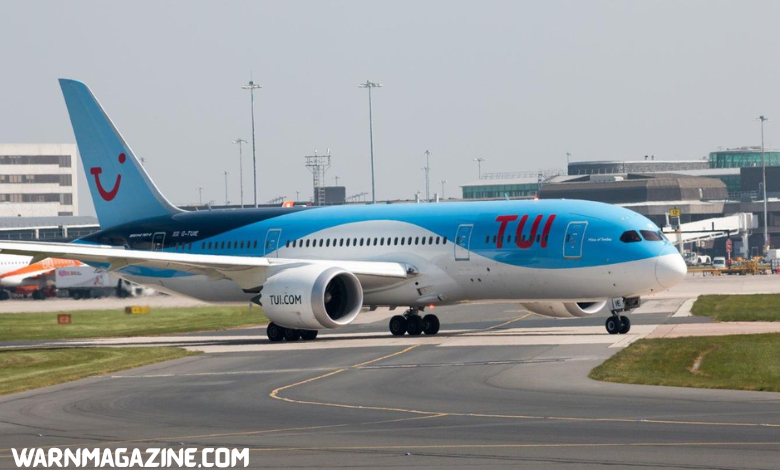
As the aircraft approached Birmingham, emergency protocols were activated on the ground. This included:
- Deployment of fire and rescue vehicles
- Temporary suspension of runway operations
- Coordination with medical teams
The aircraft performed a controlled descent and landed safely without further complications.
Emergency vehicles followed the aircraft along the runway as a precaution. After stopping, the plane was inspected before passengers were allowed to disembark.
No injuries were reported.
Aircraft Involved: Boeing 737-800
The aircraft used for Flight BY6754 was a Boeing 737-800, part of a widely used family of narrow-body jets.
This aircraft type is known for:
- High reliability
- Strong safety record
- Ability to handle engine-related incidents
Modern jet engines are designed to withstand bird ingestion to a certain degree. Certification standards require engines to demonstrate resilience under such conditions.
However, precautionary landings are still standard when any abnormal engine behavior is detected.
Understanding Bird Strikes in Aviation
Bird strikes are a known operational risk across global aviation. They occur most frequently:
- During takeoff
- During landing approach
- At altitudes below 3,000 feet
Airports often exist near natural habitats such as wetlands, coastlines, or urban areas where birds are present.
Common bird types involved include:
- Waterfowl
- Gulls
- Raptors
- Pigeons
Large birds or flocks pose a greater risk due to mass and potential for multiple impacts.
Why Takeoff Is the Most Critical Phase
The timing of the BY6754 incident is significant. The takeoff phase is considered highly critical in aviation due to limited altitude, increasing speed, and reduced margin for immediate corrective actions.
- Aircraft are at low altitude
- Speed is still increasing
- Options for diversion are limited
If an engine issue occurs during this phase, pilots must make quick decisions with minimal margin for error.
In this case, the aircraft had sufficient altitude to stabilize and divert safely, which contributed to the successful outcome.
Airport Emergency Preparedness
The response at Birmingham Airport demonstrated how airports prepare for such events.
Standard readiness includes:
- Fire and rescue teams on standby
- Rapid runway clearance
- Coordination with airline operations
Airports regularly conduct drills for emergency landings to ensure quick response times. These procedures are designed to minimize risk even if a situation escalates.
The controlled handling of BY6754 shows how these systems function in real scenarios.
Communication Challenges During Emergencies

One aspect highlighted by this incident is communication.
Passengers often expect immediate clarity, but in reality:
- Pilots need time to verify technical data
- Initial information may be incomplete
- Communication must avoid causing panic
Flight crews use structured communication frameworks to balance accuracy and reassurance.
Cabin crew are trained to:
- Observe passenger behavior
- Provide calm instructions
- Prepare for different outcomes
While information gaps can cause anxiety, they are often part of managing evolving situations.
Broader Aviation Safety Context
The tui flight by6754 emergency landing fits into a broader pattern of aviation risk management.
Globally, wildlife strikes are increasing due to several factors:
- Expansion of air traffic
- Changes in bird migration patterns
- Urban development near airports
Airlines and regulators continuously update procedures to address these risks.
Modern safety measures include:
- Wildlife monitoring systems at airports
- Bird detection radar
- Habitat management around runways
Despite these efforts, complete elimination of bird strikes is not possible, making response preparedness essential.
Comparison with Other Incidents
While most bird strike incidents end safely, there have been serious cases in aviation history.
The well-known Hudson River landing in 2009 demonstrated how dual engine failure can occur after bird ingestion. More recent incidents have also shown the potential severity when multiple birds are involved.
Compared to those cases, BY6754 represents a controlled and successful emergency response without escalation.
Investigation and Aftermath
After landing, standard investigation procedures were initiated. These typically involve:
- Inspection of engine components
- Review of flight data
- Analysis of bird remains (if present)
Airlines and aviation authorities use these findings to improve safety measures.
The aircraft would not return to service until all systems were cleared and repairs completed if needed.
Why This Incident Matters
Although no injuries occurred, the incident is important for several reasons:
- It shows real-time decision-making by flight crews
- It highlights ongoing risks from wildlife
- It demonstrates the effectiveness of emergency systems
Such events are reminders that aviation safety depends on preparation, training, and coordination.
Conclusion
The tui flight by6754 emergency landing today stands as an example of how aviation systems handle unexpected challenges.
From the initial bird strike to the safe landing at Birmingham Airport, each stage followed established procedures designed to protect passengers and crew.
While incidents like this can be unsettling, they also reinforce confidence in aviation safety frameworks. The combination of trained crews, resilient aircraft, and prepared airports ensures that even when problems occur, they can be managed effectively.
The event is not just a standalone occurrence but part of a broader operational reality in aviation—one where risks are continuously monitored, managed, and mitigated through structured systems and global cooperation.