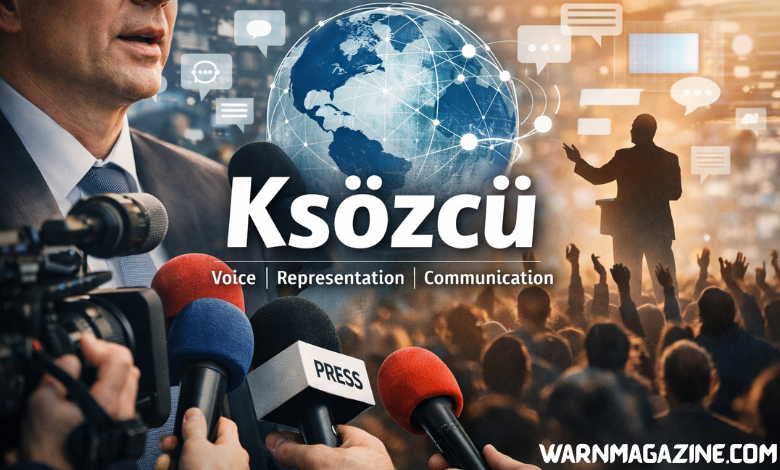
Ksözcü: Understanding the Modern Role of Spokespersons in Communication and Media
In today’s rapidly evolving digital landscape, new words and concepts often emerge, capturing the attention of internet users and sparking curiosity. One such word is “Ksözcü,” which has been gaining traction in various discussions about communication, media, and public representation. Though its spelling may seem unfamiliar at first glance, the concept behind Ksözcü is not entirely new, yet it has adapted to modern language trends and digital culture in a way that makes it particularly intriguing.
At its core, Ksözcü refers to a spokesperson, messenger, or representative – someone who communicates the thoughts, ideas, or messages of a larger group. This role has existed for centuries in different forms, from political spokespersons to journalists, but in the digital age, the term has evolved and become more fluid, expanding to include influencers, content creators, and even everyday individuals with a strong online presence. This article explores the meaning, evolution, and significance of Ksözcü in the contemporary world, offering insights into its linguistic origins, symbolic meaning, and its relevance in politics, media, and the digital sphere.
The Literal and Symbolic Meaning of Ksözcü
The literal meaning of Ksözcü is relatively straightforward – it signifies someone who speaks on behalf of others, delivering messages, ideas, or decisions to the public. In this sense, the word is synonymous with a spokesperson, a representative, or a messenger. The essence of this role is to communicate clearly, effectively, and responsibly, ensuring that the audience understands the message being conveyed.
However, the word carries a deeper symbolic meaning as well. Ksözcü is not just about transmitting information; it also represents the power of voice, identity, and responsibility. A Ksözcü is not merely a figurehead; they are the ones who give a voice to the voiceless, bridge gaps between different communities or groups, and help foster understanding. In this symbolic sense, Ksözcü embodies the idea that communication is not just about speaking, but about creating meaningful connections between people, ideas, and cultures.
The Linguistic Roots of Ksözcü
To truly understand the significance of Ksözcü, it’s important to explore its linguistic origins. The word is rooted in the Turkish language, where “söz” means “word” or “speech.” In Turkish, many words are formed by adding suffixes to the root, which helps to indicate the role or occupation of the person performing an action. The suffix “-cü” or “-ci” is commonly used to create nouns that describe people associated with specific tasks, such as “sporcu” (athlete) or “yazıcı” (writer or printer).
When “söz” is combined with the suffix “-cü,” it forms “sözcü,” which translates to “spokesperson” or “representative.” Ksözcü, then, is a modern, stylized variant of this word, likely influenced by the digital age’s tendency to create more memorable and visually appealing terms. This adaptation reflects the fluidity of language in the online world, where words and phrases are often altered to fit new trends or digital spaces.
Ksözcü is an example of how language evolves over time, adapting to new communication methods, platforms, and cultural shifts. While the word maintains its traditional meaning, its new form resonates with the modern, internet-savvy generation, appealing to those who seek a more personalized and creative approach to language.
Ksözcü in Media and Journalism
One of the most significant areas where Ksözcü plays a crucial role is in journalism and media. In traditional media, reporters, journalists, and editors have always served as the public’s voice, conveying information and offering insights on events, policies, and social issues. In this context, journalists can be seen as modern-day Ksözcü figures, acting as messengers who inform the public, raise awareness about important issues, and hold those in power accountable.
The role of Ksözcü in media is particularly important because of the responsibility that comes with disseminating information. Journalists are tasked with reporting the truth and ensuring that their stories are accurate, unbiased, and informative. This responsibility carries significant weight, as media coverage has the power to shape public opinion, influence policy decisions, and even drive social change.
In the digital era, the definition of Ksözcü has expanded beyond traditional journalism. With the rise of social media, blogs, podcasts, and citizen journalism, anyone with an online platform can become a spokesperson or representative of a particular cause or community. Social media influencers, bloggers, and content creators have the power to reach vast audiences, making them key players in shaping public discourse. These individuals often speak on behalf of their followers, share their perspectives on various issues, and offer a voice to those who might not have a platform of their own.
The emergence of digital journalism and citizen-driven content has blurred the lines between traditional media and online platforms, allowing anyone to act as a Ksözcü figure. Whether it’s a YouTuber discussing social justice issues, a podcaster interviewing experts, or an Instagram influencer advocating for environmental change, the digital age has democratized communication and given more people the ability to represent ideas, communities, and causes.
Ksözcü in Politics and Governance
The concept of Ksözcü is also highly relevant in the realm of politics and governance. Political spokespersons, government press secretaries, and official representatives play an essential role in communicating policies, decisions, and government actions to the public. In this context, the Ksözcü acts as a bridge between the government and the people, ensuring that information is conveyed clearly and effectively.
During times of political change, elections, or national crises, the role of a Ksözcü becomes even more vital. Governments often face complex issues that require careful explanation and communication to the public. A skilled spokesperson can help clarify the government’s position, address public concerns, and maintain transparency, thereby fostering trust and confidence in the political system.
At the same time, political communication can also be a source of contention. Misleading or vague statements can erode public trust, while clear, honest communication can strengthen democratic institutions. The ethical responsibility of a Ksözcü in politics is to communicate in a way that respects the public’s right to know, providing information that is both accurate and accessible.
The Digital Age: The Rise of Digital Ksözcü
In today’s digital world, the role of Ksözcü has expanded even further. The internet has provided countless opportunities for individuals to become public voices, share ideas, and represent causes. Bloggers, YouTubers, podcasters, and social media influencers now serve as modern Ksözcü figures, using their platforms to communicate with large audiences and influence public opinion.
The internet has also enabled the rise of citizen journalism, where ordinary people can report on events, share their perspectives, and engage with global issues. In this digital age, everyone with an internet connection can potentially become a spokesperson for a particular community, cause, or issue. This democratization of communication has given people more control over their representation, allowing them to share their voices and connect with others who share their views.
However, this new era of digital communication also comes with its own set of challenges. The internet has made it easier for misinformation and fake news to spread quickly, creating an environment where trust is constantly being tested. As a result, the role of Ksözcü in the digital age requires even more responsibility. Digital spokespersons must be mindful of the impact of their words, as online platforms have the potential to reach millions of people in a matter of seconds.
Ksözcü as a Cultural Symbol
Beyond its role in politics, media, and digital culture, Ksözcü also holds cultural and symbolic significance. Throughout history, societies have relied on individuals – writers, poets, storytellers, and artists – to represent collective experiences, express shared values, and preserve cultural traditions. In this sense, Ksözcü can also be seen as a cultural figure, one who speaks for a generation, a movement, or a community.
Artists, writers, and creatives often serve as the voice of society, capturing the essence of a particular time or place. Through their work, they communicate emotions, struggles, and hopes that resonate with a wider audience. In this way, Ksözcü represents not only communication in a political or media sense but also cultural expression that connects people through shared meaning and identity.
The Future of Ksözcü
The role of Ksözcü will continue to evolve as communication methods change and new technologies emerge. Artificial intelligence, virtual spokespersons, and automated media systems are already beginning to play a larger role in how information is created and shared. As technology advances, the definition of Ksözcü may expand further, with new forms of representation emerging in digital spaces.
However, the core principles of Ksözcü – responsibility, clarity, and trust – will remain as essential as ever. As we move forward, the importance of effective communication, whether through traditional media or digital platforms, will only continue to grow. The future of Ksözcü is not just about adapting to new technologies but ensuring that communication remains grounded in truth, ethics, and meaningful connection.
Conclusion
Ksözcü, as a modern variation of the Turkish word “sözcü,” represents a timeless concept in communication: the voice that speaks for others. Whether in politics, media, or digital spaces, the role of a Ksözcü is essential in fostering understanding, building trust, and connecting people across cultures and communities. As communication continues to evolve in the digital age, the concept of Ksözcü will remain crucial in shaping how we share ideas, express values, and engage with the world around us.