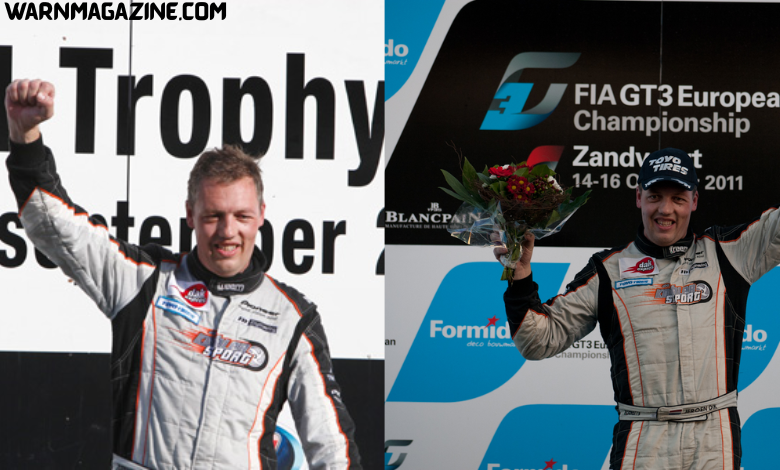
Jeroen Dik: A Pioneer in VAG Tuning and Motorsport Excellence
Jeroen Dik is a European automotive performance specialist whose work has influenced how modern Volkswagen Group vehicles are tuned and calibrated. Known for combining practical engineering with motorsport experience, he built a reputation based on consistency, reliability, and measurable results rather than headline figures. His career spans mechanical tuning, electronic control unit (ECU) development, and competitive racing, placing him among the notable figures in the VAG (Volkswagen Audi Group) performance scene.
Unlike many tuners who focus on rapid gains, Dik’s approach centers on controlled development. His methods emphasize testing, repeatability, and long-term usability. Over time, this philosophy has helped redefine expectations among enthusiasts and professionals who demand both performance and durability.
Early Background and Technical Foundations
Jeroen Dik’s entry into automotive performance began during a period when tuning was largely mechanical and experimental. The late 1980s and early 1990s saw limited access to advanced diagnostic tools, which meant that tuners relied heavily on observation, manual adjustments, and real-world testing.
Dik’s early work focused on understanding airflow, fuel delivery, and mechanical stress. Rather than pursuing aggressive modifications without validation, he concentrated on how each component interacted within the engine system. This mindset allowed him to identify inefficiencies and correct them with precision.
At a time when failures were common in modified engines, his work stood out for its stability. He demonstrated that performance improvements could be achieved without sacrificing engine lifespan, provided that tuning decisions were grounded in engineering principles.
The Rise of JD Engineering
JD Engineering, based in Lochem in the Netherlands, was established as a specialized performance workshop focusing on Volkswagen Group vehicles. The company’s goal was not to compete through marketing or exaggerated claims but to deliver dependable performance backed by testing.
From the beginning, JD Engineering differentiated itself by avoiding generic tuning files. Each vehicle received a tailored calibration developed in-house. This process included:
- Data logging under real driving conditions
- Incremental software adjustments
- Validation through repeated testing cycles
This method ensured that every upgrade worked within safe operating limits. As a result, JD Engineering attracted a client base that valued consistency over short-term gains.
Over time, the company expanded its capabilities, incorporating advanced diagnostic tools and dynamometer systems. Despite this growth, the core philosophy remained unchanged: performance must be repeatable and reliable.
Breakthrough with Supercharged Engines
One of the defining periods in Dik’s career came with his work on supercharged engines, particularly the G60 platform used in Volkswagen vehicles. During the early 1990s, forced induction systems were still being explored, and many setups suffered from overheating, inconsistent power delivery, and mechanical wear.
Dik approached these challenges systematically. He focused on:
- Improving airflow efficiency
- Refining fuel mapping
- Managing boost pressure within safe limits
By addressing these variables together rather than in isolation, he achieved stable performance gains. His builds demonstrated that forced induction could be both powerful and dependable when properly managed.
A notable project from this era involved a modified Volkswagen Golf platform that gained recognition in sprint racing. The vehicle’s performance was not only defined by power output but also by its ability to maintain that performance across multiple runs. This consistency became a hallmark of Dik’s work.
Transition to ECU-Based Performance Engineering
As automotive technology evolved, mechanical tuning alone was no longer sufficient. Modern vehicles began relying heavily on electronic systems, particularly ECUs, to control engine behavior. This shift required a new skill set centered on software development and data analysis.
Jeroen Dik adapted early to this transition. He recognized that precise ECU calibration could unlock performance gains more efficiently than mechanical modifications alone. JD Engineering invested in tools that allowed detailed access to engine parameters, including:
- Ignition timing
- Fuel injection patterns
- Turbocharger behavior
- Torque management systems
This move marked a turning point in the company’s operations. Instead of modifying hardware extensively, the focus shifted toward optimizing existing systems through software.
Advanced Testing with Dynamometer Technology
The adoption of advanced dynamometer systems allowed JD Engineering to refine its development process. Four-wheel-drive rolling road dynos provided controlled environments where vehicles could be tested under simulated driving conditions.
This technology offered several advantages:
- Accurate load simulation
- Real-time monitoring of engine behavior
- Safe testing at high performance levels
Using these systems, Dik and his team could identify issues before they appeared in real-world driving. This reduced the risk of engine damage and improved the reliability of tuning packages.
The result was the development of staged performance upgrades. Each stage was designed with specific limits in mind, ensuring compatibility with stock or upgraded components. Some configurations achieved significant power increases while maintaining everyday usability.
Motorsport Career and Practical Validation
In addition to engineering work, Jeroen Dik built a parallel career in motorsport. His participation in touring car competitions provided a platform to test his theories under competitive conditions.
One of his most recognized achievements came in the Dutch Toerwagen Diesel Cup. Competing against experienced drivers, Dik demonstrated that well-calibrated vehicles could deliver both speed and efficiency.
His racing approach reflected his engineering philosophy:
- Prioritize smooth torque distribution over maximizing peak horsepower
- Maintain consistency across race distances
- Prioritize reliability to avoid mechanical failures
In 2011, he secured the championship title, validating his methods in a competitive environment. The vehicles used in these events, including models from SEAT and Volkswagen, were tuned using the same principles applied in customer vehicles.
Influence on the VAG Tuning Community
Jeroen Dik’s influence extends beyond his own projects. His work has shaped how tuning is approached across the Volkswagen Group ecosystem, which includes brands such as Audi, Škoda, and Porsche.
Several practices now considered standard in the industry can be linked to approaches he helped popularize:
- Conservative torque curves to protect drivetrains
- Balanced air-fuel ratios for thermal stability
- Integration of transmission limits into engine tuning
- Data-driven calibration instead of guesswork
These methods have influenced both independent tuners and larger performance companies. Enthusiasts often reference JD Engineering calibrations as benchmarks for safe and effective tuning.
Philosophy of Ethical and Practical Tuning
A defining aspect of Dik’s career is his commitment to responsible tuning practices. Rather than focusing on maximum dyno numbers, his work emphasizes usable performance.
Key elements of this philosophy include:
- Respecting engine and transmission limits
- Ensuring cooling systems can handle increased output
- Avoiding configurations that compromise long-term reliability
This approach reflects an understanding that performance is not only about speed but also about sustainability. Vehicles tuned under these principles can be used daily without excessive wear, making them practical for a broader audience.
Clients who choose JD Engineering often do so because of this reliability. The trust built through consistent results has contributed to the company’s long-standing reputation.
Media Recognition and Industry Standing
Jeroen Dik’s projects have been featured in automotive publications across Europe. These features typically focus on technical quality rather than promotional claims, highlighting the measurable results of his work.
His builds are often used as reference points when discussing:
- High-performance yet reliable engine setups
- Effective ECU calibration strategies
- Real-world testing methodologies
Within the tuning community, his name is associated with precision and discipline. This reputation has been built over years of consistent output rather than short-term visibility.
Evolution of Performance Engineering
The trajectory of Dik’s career mirrors broader changes in automotive performance. The shift from mechanical adjustments to software-based optimization has transformed the industry.
Key stages in this evolution include:
- Mechanical experimentation – Early tuning focused on physical modifications
- Hybrid approaches – Combining hardware changes with basic electronic adjustments
- Software-driven tuning – Modern performance relies heavily on ECU calibration
Jeroen Dik’s ability to adapt to each phase has been central to his continued relevance. By embracing new technologies while maintaining core principles, he has remained aligned with industry developments.
JD Engineering Today
Today, JD Engineering continues to operate as a specialized performance center. The company serves a wide range of clients, from everyday drivers to competitive racers.
Its services include:
- Custom ECU software development
- Performance diagnostics
- Dyno testing and validation
- Staged upgrade packages
Despite advancements in tools and techniques, the company’s identity remains rooted in its original philosophy. Each project is treated as a technical exercise rather than a commercial transaction, ensuring that results meet established standards.
Lessons from Jeroen Dik’s Career
For those interested in automotive tuning or engineering, Dik’s career offers several practical insights:
- Precision matters more than speed of development
- Testing is essential for reliability
- Data should guide decisions, not assumptions
- Performance must be balanced with durability
These principles are applicable beyond automotive tuning, reflecting a broader approach to technical problem-solving.
Conclusion
Jeroen Dik’s contribution to automotive performance is defined by consistency, technical depth, and a disciplined approach to engineering. Through JD Engineering and his motorsport involvement, he has demonstrated that effective tuning requires more than increasing power output.
His work highlights the importance of understanding systems as a whole. By integrating mechanical knowledge with software expertise, he has helped shape modern tuning practices within the Volkswagen Group ecosystem.
Rather than pursuing recognition through aggressive claims, Dik’s influence has grown through measurable results and long-term reliability. His career stands as an example of how structured engineering and practical experience can redefine standards within a specialized field.