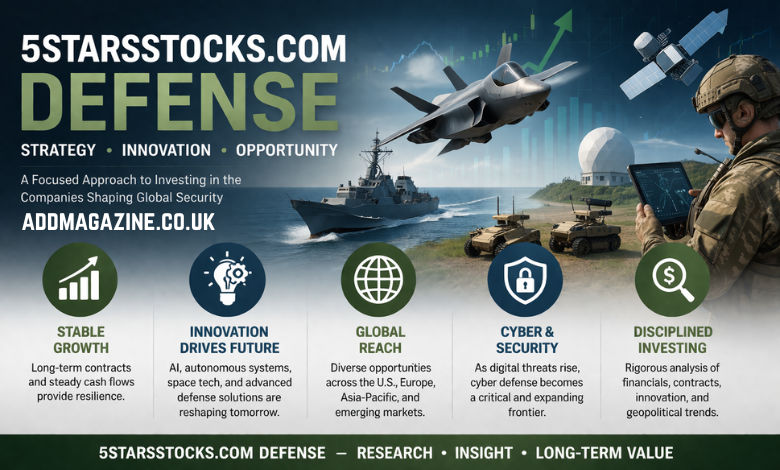
5StarsStocks.com Defense: A Comprehensive Guide to Investing in the Future of National Security and Technological Innovation
The defense sector has long been recognized as one of the most resilient and strategically important segments of the global economy. With significant budgets backed by government spending and a consistent demand for national security, it represents a stable foundation for long-term investment. For investors looking to tap into this stability while also capitalizing on growth opportunities, 5StarsStocks.com Defense offers a refined approach to navigating the complexities of defense stocks.
In this article, we will explore the unique philosophy behind 5StarsStocks.com Defense, the intricacies of defense sector investing, and how technological advancements are reshaping the industry. By focusing on well-researched insights, we will break down the fundamental drivers of the sector and offer a comprehensive look at how a disciplined, research-driven approach can yield sustainable returns for investors.
What is 5StarsStocks.com Defense?
5StarsStocks.com Defense is a specialized framework designed to provide investors with in-depth analysis and recommendations related to defense sector stocks. This strategy focuses specifically on companies involved in the production of military technologies, aerospace systems, cybersecurity, and national security infrastructure. Instead of taking a broad approach to the stock market, 5StarsStocks.com Defense narrows its focus to companies whose core revenue streams are derived from long-term military contracts, government partnerships, and the growing demand for cutting-edge defense technologies.
The core value proposition of 5StarsStocks.com Defense lies in its ability to provide a data-driven and nuanced understanding of the defense industry. By identifying companies that are positioned for growth within the defense and aerospace ecosystem, this platform helps investors make informed decisions about where to allocate capital.
Key Drivers of the Defense Sector
The defense industry is unique in many ways, and understanding the key drivers of this sector is essential for making smart investment choices. Here are some of the most important factors influencing the defense sector today:
1. Government Spending and National Security Priorities
National security spending forms the backbone of the defense industry. Governments around the world allocate significant portions of their budgets to defense, driven by the need to protect citizens, safeguard national interests, and maintain geopolitical power. This spending is generally stable, as defense is considered a top priority by most nations.
For investors, the government-backed nature of defense contracts offers a level of predictability that is rare in other industries. Defense companies often secure multi-year contracts that provide long-term revenue visibility. This makes them particularly attractive to those seeking investments with consistent cash flows.
2. Technological Advancements and Innovation
The defense sector is heavily driven by technological innovation. From advanced radar systems to hypersonic weapons, the demand for next-generation technologies is high. Companies in this space invest significant resources into research and development (R&D) to stay ahead of the curve. Technological advancements not only enhance the military capabilities of nations but also open up new growth opportunities for defense contractors.
AI-driven intelligence systems, autonomous drones, and cyber-defense technologies are transforming the landscape of modern warfare. As a result, defense companies that are quick to adopt and develop these technologies can secure a competitive edge, ensuring their relevance in an ever-evolving market.
3. Geopolitical Tensions and Global Defense Spending
The defense sector does not operate in a vacuum; it is heavily influenced by geopolitical factors. In times of increased global tensions, nations typically ramp up their defense spending to secure their borders, ensure military readiness, and address emerging threats. For investors, understanding global political dynamics—such as trade relations, military alliances, and regional conflicts—is crucial when assessing the outlook for defense stocks.
The United States has long been the largest defense spender, but other regions, including Europe, Asia, and the Middle East, are significantly increasing their defense budgets in response to regional security concerns. This global increase in defense spending creates new opportunities for defense contractors, particularly those with diversified international revenue streams.
Types of Companies in the Defense Ecosystem
The defense sector is diverse and consists of several types of companies that each serve different roles within the defense ecosystem. Understanding where a company fits within this hierarchy is crucial for investors, as different segments of the market present varying risk profiles and growth potential.
1. Prime Contractors
At the top of the defense industry are the prime contractors—large corporations that secure major contracts from governments and military institutions. These companies manage complex projects and produce large-scale military systems, including fighter jets, missile defense systems, naval ships, and satellites. Some of the largest players in this space include Lockheed Martin, Raytheon Technologies, Northrop Grumman, and Boeing.
Prime contractors are often seen as the backbone of the defense sector. Due to their scale, political connections, and diversified portfolios, these companies can weather fluctuations in the market more easily than smaller firms. They are typically more stable investments, offering consistent revenue streams and dividend payouts.
2. Mid-Tier Companies
Below the prime contractors are mid-tier companies that specialize in specific technologies or systems. These might include avionics, propulsion systems, cybersecurity solutions, or satellite components. While these firms may not secure the same level of contracts as prime contractors, they often serve as essential suppliers to larger companies, providing specialized components or services.
Mid-tier companies can offer higher growth potential but may come with increased volatility. Their success is often tied to the performance of the larger contractors they serve, as well as the overall demand for specific defense technologies.
3. Cybersecurity and Defense Technology Providers
As warfare becomes increasingly digital, cybersecurity is emerging as a crucial component of national defense. Companies that specialize in securing digital infrastructures, developing secure communications platforms, and providing AI-driven surveillance are rapidly gaining importance in the defense sector.
With the growing threats posed by cyberattacks, companies in this space are positioned for significant growth. Their products and services are essential to the protection of sensitive military and governmental data, making them a key segment within the defense ecosystem.
Stability and Risk in Defense Investing
One of the main attractions of defense investing is its stability. Governments tend to prioritize defense spending regardless of economic conditions, which means that the defense sector often remains resilient during periods of economic downturns. This stability makes defense stocks an attractive option for investors seeking steady cash flows and consistent returns.
Moreover, defense contractors operate under long-term contracts, which reduces exposure to short-term market fluctuations. These contracts often span several years, providing a clear revenue pipeline for investors. Additionally, many defense companies pay dividends to shareholders, making them appealing for those looking to generate passive income.
However, like all sectors, defense investing comes with its risks. Geopolitical changes, shifts in government priorities, and regulatory challenges can all impact the flow of contracts and, ultimately, a company’s profitability. For instance, policy changes such as defense budget cuts or restrictions on exports can adversely affect the growth potential of defense contractors.
Technological Trends Shaping the Future of Defense
The future of the defense sector is being shaped by rapid technological advancements. These innovations are not only enhancing the capabilities of military forces but also creating new opportunities for defense contractors. Some of the most significant technological trends in the defense industry include:
1. Artificial Intelligence and Autonomous Systems
AI and autonomous systems are revolutionizing the defense industry. AI is being used to enhance surveillance, improve decision-making processes, and develop smarter weapons systems. Drones and unmanned vehicles are reducing the risk to human life while expanding operational capabilities.
2. Quantum Computing and Hypersonic Weapons
Quantum computing has the potential to disrupt the defense sector by enabling faster data processing, advanced simulations, and improved encryption techniques. Similarly, hypersonic weapons—missiles capable of traveling at speeds greater than Mach 5—are being developed as a next-generation deterrent.
3. Space-Based Defense Systems
Space has become a critical domain for defense operations. Companies involved in satellite communications, missile tracking, and space-based surveillance are becoming increasingly important. The U.S. Space Force and other countries’ space programs are driving demand for these technologies, creating significant growth opportunities for defense contractors.
4. Cybersecurity
As digital threats continue to evolve, cybersecurity is becoming a top priority for defense companies. Governments are investing heavily in securing their digital infrastructures, leading to growth in the demand for cyber defense solutions. As cyber threats evolve, companies in this sector are well-positioned for sustained growth and success.
Balancing Risk and Reward: A Disciplined Strategy
Investing in defense stocks requires a careful balancing act. On the one hand, the sector offers stability and long-term growth potential driven by government contracts and technological innovation. On the other hand, geopolitical risks, regulatory challenges, and project execution risks can impact the profitability of defense companies.
To navigate this landscape successfully, investors must adopt a disciplined investment strategy. This involves focusing on financial health, understanding the competitive dynamics of the sector, and staying informed about geopolitical developments. By analyzing companies’ backlogs, operating margins, free cash flow, and debt levels, investors can identify firms with solid financial foundations and strong growth prospects.
Evaluating Companies in the Defense Sector: A Structured Approach
When evaluating companies within the defense sector, a structured, research-driven approach is essential. It’s not just about identifying firms that are well-established but also about understanding how they operate, their position within the ecosystem, and their growth potential. Investors should consider several factors when deciding which defense stocks align with their goals.
1. Backlog and Contract Pipeline
One of the most significant factors to consider when evaluating defense companies is their contract backlog. Defense contractors often operate with multi-year contracts, which provide stability and predictability. A strong backlog indicates that a company has future revenue already secured, reducing its exposure to market volatility and economic downturns.
For example, large firms like Lockheed Martin and Northrop Grumman often report multi-billion-dollar backlogs, which assure investors that the company’s growth prospects are well supported by government demand for their products and services.
The more robust and diverse the contract pipeline, the more resilient the company will be. Companies with long-term agreements or contracts related to national defense and security infrastructure are likely to generate steady revenue flows, making them particularly attractive to long-term investors. In contrast, firms relying on shorter-term projects may present higher risk.
2. Innovation and Research & Development (R&D)
As with any sector, innovation is crucial for maintaining a competitive edge. In the defense sector, this is especially important, as technological advancements often dictate the future direction of warfare and national security. Defense firms that allocate significant resources to research and development (R&D) are better positioned to drive industry innovation. Companies developing cutting-edge technologies such as hypersonic weapons, self-driving systems, and next-gen radar solutions are primed for substantial growth.
Investors should look for companies that not only have a strong R&D budget but also a history of successfully translating R&D into market-ready products. Firms like Raytheon Technologies, Boeing, and General Dynamics, which regularly push the envelope in aerospace systems, missile defense, and cybersecurity, are examples of companies with robust innovation pipelines.
3. Geopolitical Exposure and Diversification
A unique aspect of defense investing is its sensitivity to geopolitical developments. Political tensions, international conflicts, and regional security concerns can all directly influence defense spending. As global powers vie for dominance and security, defense contractors with diversified international operations may be better positioned to weather market uncertainties.
For example, companies with a strong presence in both the U.S. and foreign markets can mitigate the risks associated with changes in government policies or defense budgets. In contrast, companies reliant on a single government’s defense budget may be vulnerable to budget cuts or shifting political priorities.
A disciplined investment strategy involves recognizing how geopolitical shifts affect a company’s business model. Firms that maintain a global footprint or secure contracts from multiple countries are better insulated from any single government’s policy changes.
4. Financial Metrics: Evaluating Health and Sustainability
Evaluating a company’s financial stability is crucial when determining its suitability for investment. In the defense sector, where long-term contracts and government spending provide a degree of stability, it’s essential to understand a company’s ability to manage its resources effectively.
Free Cash Flow: One of the most important metrics is free cash flow, which supports dividends, stock buybacks, and debt repayment. Companies with steady free cash flow are better equipped to handle periods of uncertainty and continue rewarding shareholders.
Operating Margins: Since many defense contracts are fixed-price agreements, operational efficiency is paramount. Companies that consistently maintain strong operating margins demonstrate their ability to control costs and maintain profitability despite external pressures, such as rising raw material prices or regulatory compliance costs.
Debt Levels: Defense companies, particularly larger primes, can carry significant debt loads. However, manageable debt levels—supported by strong, predictable cash flows—are typically not an issue. Over-leveraging, on the other hand, can be problematic, especially if a company faces delays in fulfilling contracts or if defense budgets are reduced.
5. Dividends and Shareholder Returns
For income-focused investors, dividends are a significant factor to consider. Many established defense companies offer attractive dividends due to their steady cash flow and long-term government contracts. Companies like Lockheed Martin and Northrop Grumman are known for their commitment to returning capital to shareholders through dividends and share buybacks. These actions not only offer investors a reliable income stream but also signal strong financial health and shareholder-focused management.
Risk Factors in Defense Investing
While the defense sector offers considerable opportunities, it is not without its risks. Understanding these risks is essential for building a diversified and well-balanced portfolio.
1. Geopolitical Risk
As mentioned earlier, defense stocks are highly influenced by geopolitical events. Rising tensions between countries, international conflicts, and changes in military alliances can all impact defense budgets and procurement strategies. For instance, the ongoing geopolitical issues in the Middle East and the recent rise in tensions between the U.S. and China could significantly impact global defense spending.
While defense spending often rises during times of increased tension, unexpected policy shifts, such as a new administration prioritizing domestic programs over defense, could lead to budget cuts. Therefore, understanding how international and political developments can influence a company’s revenue streams is crucial.
2. Regulatory and Compliance Risks
The defense industry is subject to stringent regulations and oversight, influencing how companies navigate their operations. Export controls, procurement regulations, and compliance with international treaties are just a few of the hurdles they must navigate. Failure to comply with these regulations can result in fines, contract suspensions, and reputational damage.
Moreover, changes in defense procurement laws or government spending priorities can directly impact a company’s ability to secure new contracts. Investors need to monitor regulatory changes in the defense sector closely, as they can introduce new risks or opportunities.
3. Execution Risk
The execution of complex defense contracts can be challenging. Delays, cost overruns, and technical issues with the development of advanced systems can all impact a company’s profitability and investor confidence. For example, a fighter jet program may experience delays due to technical challenges, affecting revenue and leading to cost overruns.
While large defense companies often have the experience and resources to handle these challenges, execution risk remains an inherent part of the industry. Understanding a company’s track record in delivering contracts on time and within budget can help investors assess the likelihood of execution risks.
Emerging Trends: Technology and the Future of Defense
The defense sector is evolving rapidly, with technological innovations playing a central role in shaping its future. Understanding these trends and identifying companies that are well-positioned to capitalize on them can provide a significant advantage for investors. Some of the key emerging trends include:
1. AI and Autonomous Systems
Artificial intelligence and autonomous systems are increasingly playing a crucial role in defense. AI-driven analytics, machine learning, and autonomous drones are transforming military operations by improving decision-making, surveillance, and combat effectiveness. Companies involved in developing AI-based defense solutions are well-positioned to lead in this new age of warfare.
2. Space and Satellite Technologies
Space has become a key battlefield in modern defense strategies. The U.S. Space Force, along with other national space programs, is driving demand for advanced satellite technologies, missile tracking systems, and space-based surveillance. Companies involved in aerospace and space technologies will likely continue to see growth as space becomes more integrated into national security strategies.
3. Cybersecurity and Digital Defense
As cyber threats continue to grow, the demand for robust cybersecurity solutions in the defense sector is accelerating. Cybersecurity will become increasingly critical as military systems, communication networks, and intelligence agencies rely more on digital infrastructure. Firms specializing in cybersecurity solutions and digital defense technologies are poised for significant growth.
Conclusion
5StarsStocks.com Defense provides investors with a focused, research-driven approach to defense sector investing. By honing in on companies that are integral to national security and technological innovation, the platform helps investors identify high-potential opportunities within a traditionally stable and resilient sector. With careful analysis and a disciplined approach, defense investing can offer a blend of stability, growth, and income potential that appeals to a wide range of investors.